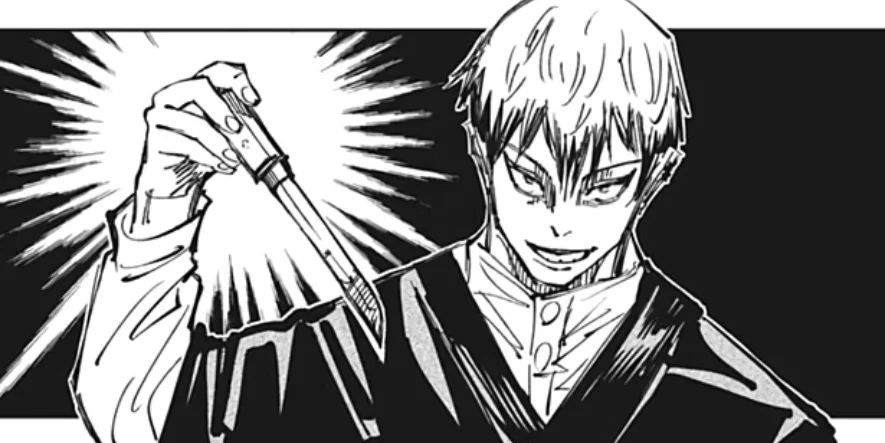
The introduction of Naoya Zen’in into the narrative sent the fandom on a sudden emotional rollercoaster in JJK. Despite his initially deceiving appearance, the moment he spoke, all illusions were shattered. Describing this aspiring clan leader as “trash” seemed insufficient to convey the lack of respect he received from fans.
Naoya became a symbol of misogyny and epitomized the questionable aspects of the Zen’in clan’s underbelly. It’s important to highlight that he wasn’t the only problematic member; the entire clan seemed to lack virtuous individuals. With various vices attributed to Naoya, his irredeemable crudeness and power-hungry nature were especially evident. His ruthlessness even extended to eliminating blood relatives without hesitation in the pursuit of his own happiness.
Fans collectively looked forward to witnessing Maki and Mai overpower him and his collaborators. However, Mai’s demise arrived sooner than expected, albeit not without consequences. The curse she entrusted to Maki resulted in the obliteration of one of the three major clans, which included Naoya.
Wait a moment—Naoya is dead? Chapter 152 swiftly unfolded, taking a significant antagonist with it in just a couple of panels. Naoya’s abrupt demise served as a shocking revelation that left fans in awe, sparking contemplation on this unexpected turn of events.
Naoya JJK: Trajic Death
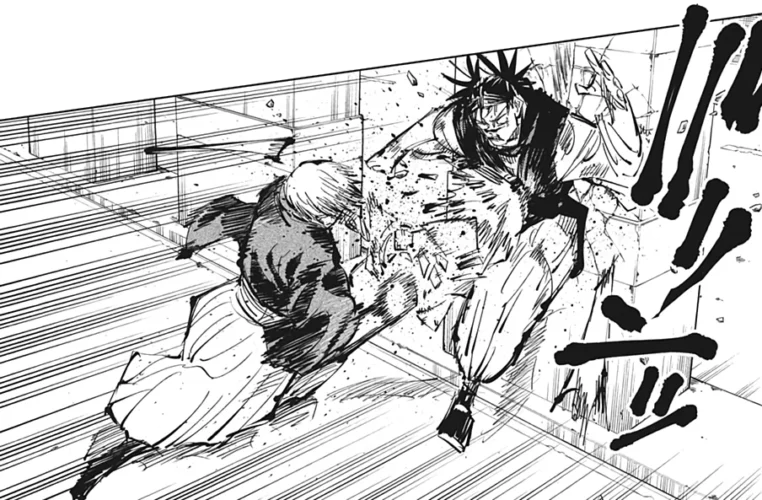
The immediate realization struck me with a resounding “Oh no, what just happened?” before I descended into a state of mourning. It was unquestionable that Naoya deserved his downfall; that much was apparent ever since his introduction. However, allow me to expound. Naoya’s demise proved to be remarkably anticlimactic, prompting me to scrutinize the plot (and Akutami, if only momentarily). The crux of the matter lies in its underwhelming nature.
To commence, the focus on Naoya following the Shibuya arc led us to anticipate that he might present a formidable challenge. This shaman embodied not only arrogance, greed, and misogyny but also stood as the prospective successor to the Zen’in clan leadership, impervious in strength (leading the Hei squad).
In contrast to Ougi and Jinichi, Naoya was singled out as the primary target for revenge by major characters. Given the attention devoted to him, our expectations were geared toward a more gruesome and satisfying conclusion to his life. At the very least, we anticipated a confrontation befitting his status as the heir apparent to the clan leadership.
As a villain with exceptional buildup and belonging to the upper echelons of the Zen’ins, Naoya met an unexpectedly straightforward demise. Beyond being an adversary, Naoya was a character from whom significant potential was anticipated. He embodied the type of villain one despises to the core yet yearns to witness for the potential they harbor. Fine, he perished; perhaps I could come to terms with that (I couldn’t). However, his demise came at the hands of an unforeseen wildcard—Maki’s mother.
Naoya Death was Premature and Disappointing in JJK
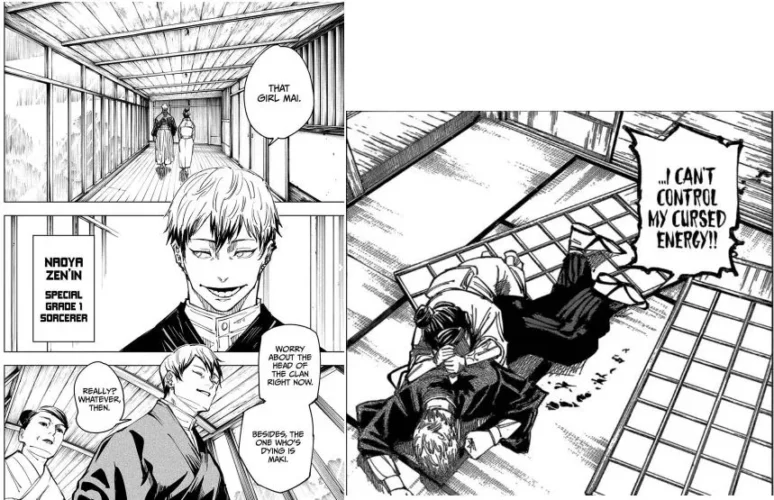
I grasp the poetic aspect truly, I do. Naoya directed his derogatory introduction towards Maki and Mai’s mother in Chapter 138. These words likely resonated with her, perhaps more profoundly than they did with us. We remain unaware of the duration during which she endured insults alongside her daughters. It was natural for her to harbor resentment towards Naoya and the Zen’ins. All of this is entirely understandable.
However, she was a character who had never displayed any affection towards her daughters. Her brief interaction with Maki was steeped in disappointment. The words she uttered to Maki were arguably the harshest a parent could direct towards their child, especially when one was poised to kill them.
And then, out of nowhere, the sudden inclination to avenge her daughter in her final moments? It simply didn’t add up. What triggered this abrupt change of heart? Furthermore, Maki’s mother was absent from Mai’s flashback. If her actions are attributed to motherhood, where was she all this time? While the sisters were enduring suffering, it seemed that their mother made no effort to comprehend their plight. What a letdown.
Unfortunately, even Shigemo’s demise seemed more justified than Naoya’s death. This disappointment stemmed from the immense potential I envisioned for Naoya as a character.
Conclusion
In conclusion, Naoya Zenin’s death in JJK is a poignant moment that adds a layer of tragedy and complexity to the narrative. The circumstances surrounding his demise unveil the harsh realities of the Jujutsu Sorcerer world, where power struggles and familial conflicts often take center stage. The fallout from Naoya’s death is likely to reverberate throughout the series, impacting characters and relationships. As the story unfolds, the tragic tale of Naoya Zenin serves as a stark reminder of the high stakes and emotional depth that Jujutsu Kaisen brings to its audience.
Suggested Read: Jujutsu Kaisen 242 Spoilers And Raw Scans